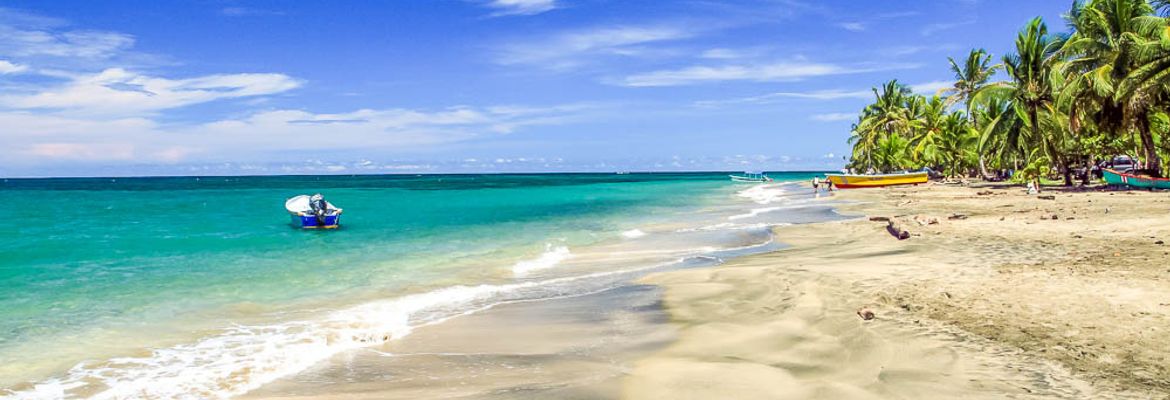
Manzanillo
The tranquil town of Manzanillo is the southernmost stop on the scenic, coastal road from Puerto Viejo. Here, the pavement ends, blending into unspoiled beaches, turquoise waters and sandy footpaths. The Panamanian border lies only a few miles south, though travelers must go to nearby Sixaola for the official border crossing.
Snapshot
Summary
Quiet beaches and laid-back atmosphere; situated within the Gandoca-Manzanillo Wildlife Refuge.
Landscape
Beaches, Rainforest
Attractions
Gandoca Manzanillo Wildlife Refuge, Nesting Sea Turtles, Wildlife
Activities
Kayaking, Snorkeling, Swimming
Caters to
Budget Travelers, Couples/Honeymooners, Nature Lovers
Facts
- Location : 138 miles from San Jose; 8 miles south of Puerto Viejo
- Altitude : Sea level
- Weather : Warm and humid, frequent rain showers
- Average Yearly Temperature : 72-95 F
Manzanillo - Everything You Need to Know
Getting There
Bus:
San Jose to Manzanillo: $10.50; 12:00 p.m.; 5 hours. Departs from the intersection of Avenida 13 and Calle Central; Terminal del Caribe. Tel 2222-0610 / 2221-7990 / 2221-2596
Car:
Take Route 32 out of San Jose, driving through Braulio Carrillo National Park. Follow the signs to Guapiles, Siquirres and Limon/Puerto Limon. In Limon, turn south on Route 36, following signs to Cahuita and Puerto Viejo. From Puerto Viejo, follow signs to Manzanillo – the town lies nine miles south of Puerto Viejo.
Shuttle Transfer:
Private transportation services are also available to the Puerto Viejo area. Air-conditioned, comfortable vans will pick you up at some of Costa Rica’s most important tourism locations, including Arenal, San Jose and Siquirres.
Activities
Bicycling
Many hotels and tour companies rent sturdy "beach combers" with baskets for as little as $5 per day. Bikes are a great way to explore the nearby beaches of Punta Mona, Punta Uva, Playa Chiquita, Playa Cocles and Puerto Viejo. The road from Manzanillo to Puerto Viejo varies from paved to dusty and pot-holed, but the trip is scenic, traffic is slow and there are several restaurants and mini-markets along the way. It takes roughly one hour to bike from the center of Manzanillo to Puerto Viejo.
Bird and Wildlife Watching
Visitors to the Manzanillo area will likely be treated to sightings of howler and white-faced monkeys, two and three-toed sloths, toucans, iguanas, butterflies, frogs and other wildlife. Walks through the Gandoca-Manzanillo Wildlife Refuge or nearby Cahuita National Park provide wonderful opportunities to spot tropical flora and fauna. In downtown Puerto Viejo, Finca La Isla Botanical Garden is ideal for birdwatching and poison dart frog spotting.
Canopy Tours
Most Puerto Viejo tour operators offer trips to the southern Caribbean’s two canopy tours. One of these tours is located in Manzanillo, and the other is an hour north of town. Canopy tours are an ideal way to see the area’s scenery while enjoying high-adrenaline fun. The canopy tour located in Manzanillo takes guests on a 75-minute, adventure-filled tour. Wildlife spotting is common and several platforms offer unparalleled views of the Gandoca-Manzanillo Wildlife Refuge.
Chocolate Tours
Those with a sweet tooth will love the educational chocolate tours offered at local cocoa farms. For a look into the area’s past and current indigenous culture, visit the Chocolate House, rumored to produce the best local, organic chocolate, or any of the area’s other indigenous chocolate tours. Those interested in getting a firsthand look at chocolate production will enjoy Puerto Viejo’s own chocolate tour, which allows visitors to literally get their hands dirty while making delicious, fresh chocolate bars.
Cultural Tours
The southern Caribbean is particularly rich in indigenous cultures. The Bribri, Kekoldi and Cabecar tribes make up the area’s largest remaining indigenous cultures, and several tours offer insight into their way of life: chocolate tours educate on the history and importance of the cocoa bean; medicinal plant tours reveal age-old secrets of preventative, herbal medicine; culture tours offer a glimpse of modern indigenous life, which has remained relatively separate from the Costa Rican lifestyle.
Fishing
Local trips with artisan fishermen can be arranged through several hotels and tour agencies. This traditional style of fishing uses a small dugout canoe or wooden panga and a hand-reel and line.
Horseback Riding
Local tour operators and hotels offer guided horseback trips through forested trails and along the beach, on both half and full day excursions. In Cahuita, tourists are treated to oceanfront horseback rides along Black Beach (Playa Negra), a beautiful and enjoyable treat.
Hiking
Cahuita National Park and Gandoca-Manzanillo Wildlife Refuge are both excellent options for light hikes along meandering trails. Several area tour operators offer informative, guided hiking tours to both national parks, in addition to several private reserves in the area.
Kayaking
Kayaks may be rented from local hotels for excursions through the canals of the Gandoca-Manzanillo Wildlife Refuge. For those adventurers who prefer to have a guide, several tour companies offer kayaking excursions to the refuge.
Rafting and Tubing
A high-adrenaline rafting trip down the Pacuare River can be arranged through several tour companies in town. Packages include a day on class III and IV rapids, transportation, a guide and meals. In addition, Bocuare Jungle Adventures offers half-day tubing tours in the nearby Estrella Valley – one- and two-person inner tubes rush down the Estrella River, passing through the Cabecar Indigenous Reserve on class II and class III rapids.
Turtle Nesting Tours (March-July)
Manzanillo is an important nesting site for leatherback turtles, also known as baula turtles, the largest sea turtles in the world. In addition, Manzanillo beaches shelter smaller populations of nesting green, hawksbill and loggerhead turtles. During nesting season, camping, beach fires and flashlights are prohibited on the area beaches.
In addition, a guide is required to visit the beaches in order to protect and preserve the nesting turtles and their eggs. For those interested in an extended, hands-on turtle experience, volunteer programs work to relocate turtle eggs, patrol the beaches and record important information on the nesting turtles; there is a minimum commitment of seven days. Turtle nesting season peaks in April and May, with some activity during March, June and July.
Snorkeling and Scuba Diving
Cahuita and Manzanillo are home to Costa Rica’s only two living coral reefs, which host more than 35 species of coral and 400 species of fish. Visibility is best in the waters off Manzanillo, though both areas benefit from calm surf. Snorkeling equipment can be rented from hotels and beachfront kiosks. Several tour companies offer snorkeling excursions to the coral reef near Cahuita National Park; pickup is available in Manzanillo. When the waters are calm, divers can enjoy more than twenty dive sites between Cahuita and Manzanillo. Local dive shops offer two-tank dives starting from $65 per trip.
Swimming
Manzanillo’s gorgeous beach provides incredible sunbathing, beautiful beachside walks and gentle swimming conditions. Be sure to heed signs, and don’t hesitate to ask if the water is safe for swimming.
Surfing
Salsa Brava is Puerto Viejo’s famous surf break and is often referred to as the country’s best wave. Located off the beach behind Stanford’s on Playa Negra, it is not Puerto Viejo’s only claim to surfing fame: Playa Cocles, just south of town, offers tall waves, steady surf and distant breaks. Surfing is also popular at the eastern end of Manzanillo’s beach, but be careful, as riptides can be strong. Surfboards can be rented at almost every beachfront shop, and many individuals and surf schools offer surfing lessons.
Attractions
Beaches:
Manzanillo
Despite the recently paved, four-mile road that connects Manzanillo to Puerto Viejo, the town’s beautiful beaches have remained tranquil, pristine and relatively untouched by tourism. Sea almond trees bow over the sand, providing shade for reading or relaxation, and the beach’s fine sand is perfect for building sandcastles and sunbathing. Snorkelers and divers can swim to coral reefs close to the shore. For an afternoon snack, grab a seafood dish at one of the local restaurants, where chefs cook up the day’s fresh catches. A series of picturesque white and black sand beaches line the coast from Puerto Viejo to Manzanillo; all easily accessed via bicycle. Many beaches are recipients of the ecological blue flag award, including Puerto Viejo’s Playa Negra, Playa Cocles, Playa Chiquita, Punta Uva, Ned Creek and Gandoca.
Playa Negra
This black sand beach is located just a few steps north of Puerto Viejo’s downtown; access it by following the beach just past the old barge near town. A reef lies offshore, and Playa Negra is known as the safest swimming beach in Puerto Viejo.
Playa Negra is also very popular as a walking beach, with soft sand and plenty of space for strolling. Salsa Brava is Puerto Viejo’s famous surf break located off the beach behind Stanford's on Playa Negra. It is renowned in the surfing community and considered by many to be the best break in Costa Rica.
Playa Cocles
Just two miles south of Puerto Viejo, Playa Cocles is a beautiful yellow-sand beach known for steady, large surfing waves. Currents are often strong, so swimmers are advised to look out for green flags, which are used by lifeguards to mark areas safe for swimming. Playa Cocles is lined with mid-range and upscale hotels and restaurants.
Playa Chiquita
Playa Chiquita is a peaceful beach about halfway between Puerto Viejo and Manzanillo, great for sunbathing and swimming. The beach is protected by coral reefs, and has natural pools ideal for swimming that form at high tide.
Punta Uva
Many say that this is the most beautiful beach in the area, ideal for walking, sunbathing and swimming. The turnoff for Punta Uva is two miles before Manzanillo and is well marked with a black and white sign.
National Parks & Private Refuges:
Gandoca-Manzanillo Wildlife Refuge
The Gandoca-Manzanillo Wildlife Refuge protects almost 70% of the southern Caribbean coast and includes some of the area’s most beautiful beaches. The refuge officially begins at the Cocles River (one mile south of Puerto Viejo) and extends 19 miles south to the Sixaola River at the Panamanian border. The refuge protects beautiful beaches, coral reefs, lowland tropical forests and several of the country’s most endangered habitats including the only jolillo palm swamp in Costa Rica.
La Ceiba Reserve
The goal of this 104-acre private reserve is to conserve land and protect local flora and fauna. It is a superb location for observing the annual migrations of several birds-of-prey. The name comes from an enormous Ceiba tree within the reserve’s boundaries. An ideal hiking destination for nature lovers, the tree is 55 feet around at its widest point, and it is a 165 foot walk just to circumnavigate the base of the tree. La Ceiba Reserve is located between Puerto Viejo and Manzanillo, inside the Gandoca-Manzanillo National Wildlife Refuge.
Bribri Indigenous Reserve and Volio Waterfall
This waterfall and hike are often part of the Bribri Reservation tour offered by several of Puerto Viejo’s tour companies. The hike is fairly easy, though recommended only for sunny days, and includes several stream crossings (be prepared for wet feet). The trip leads to a beautiful waterfall and swimming hole. The falls plummet from 50 feet above, cascading over rocks along the way. The hike takes less than 30 minutes each way with several steep ascents and descents. The Bribri Indigenous Reserve is roughly 11 miles northwest of Manzanillo, approximately a 45-minute drive.
Kekoldi Indigenous Reserve & Iguana Farm
The Kekoldi were once a part of the Bribri, but split from the larger group many years ago. Their village, located just 30 minutes from downtown Manzanillo, is home to the area’s famous iguana farm. Here, tourists learn about Kekoldi history, folklore and lands before visiting the research and reproduction facilities for the protected green iguana.
Museums, Gardens & Chocolate Plantations:
Cacao Trails
A combination of chocolate museum, botanical gardens, wildlife sanctuary, indigenous museum, canoe canals and organic medicinal herb farm, this unique park offers a little something for everyone, including guided tours, a beautiful pool and on-site restaurant boasting tasty Caribbean dishes. 2-6 hour tours are available by reservation. (Between Puerto Viejo and Cahuita. $20-$47; 2756-8186)
ChocoRart Cacao Plantation
To experience chocolate in its purest form, visit the ChocoRart organic cacao farm and chocolate factory in Playa Chiquita, just south of Puerto Viejo. Owned and operated by a Swiss couple who harvest, ferment and cook cacao in the same traditional manner that the Mayan Indians used for thousands of years. Sugar is added to the chocolate as are natural ingredients such as ginger, coconut, vanilla and nuts. Tours are offered by reservation only and chocolate tasting is included. (Playa Chiquita. Reservation required; $15 adult; 2750-0075)
Finca La Isla Botanical Garden
Open since 1987, this permaculture farm raises organic black pepper, cinnamon, vanilla, ginger, bananas, and many other fruits, spices, bromeliads and edible plants for export. Guided tours are highly recommended, and take visitors through a tasty, interesting tour of their grounds. Highlights include tapping a rubber tree, discovering where mace comes from and sampling the farm’s sweet, organic bananas. (Puerto Viejo. 10 a.m. to 4 p.m.; $5 adult, $2.50 children under 12, self-guide booklet $1; $10 per person guided tour with $30 minimum; $8 short guided tour with $24 minimum. 2750-0046.)
Tours
Gandoca Manzanillo Wildlife Refuge Hike
The Gandoca Manzanillo Wildlife Refuge covers an impressive 23,000 acres, but don't worry you won't have to trek through all of it. Three- to four-hour hikes in the refuge take you to all the sweet spots from shady ...
ContinueCahuita National Park snorkeling and hiking
The seafloor off the coast of Cahuita is as much a jungle as the rainforest, a coral forest of alien shapes and colors hiding bizarre creatures, tropical fish and crustaceans; home to sting rays, octopus and nurse ...
ContinueAttractions
Playa Chiquita
Small waves push the crisp transparent blue waters over the cream-colored sands of Playa Chiquita, changing them to a pale bronze. This thin strip of sand runs from Playa Cocles all the way to Playa Manzanillo, barely ...
ContinuePlaya Cocles
Playa Cocles' bronze sand spreads in a broad swath from the tide line to the street, a great place for a pick-up game of soccer, building sandcastles or having a picnic. More than just sand, Cocles' has the ...
ContinueLast updated: Nov 3, 2023
Experiences in Manzanillo
- Exploring Manzanillo & Cahuita
- Catching some rays in Manzanillo
- The South Caribbean: Sloths and Butterflies

 90°F
90°F  88°F
88°F Manzanillo Yearly Temperatures
| Month | Highs | Lows | Average |
|---|---|---|---|
| Jan | 84.02 | 70.52 | 77.36 |
| Feb | 85.82 | 70.34 | 78.08 |
| Mar | 86.18 | 70.88 | 78.44 |
| Apr | 88.16 | 72.68 | 80.42 |
| May | 89.24 | 73.58 | 81.5 |
| Jun | 89.42 | 74.3 | 81.86 |
| Jul | 86.54 | 73.58 | 80.06 |
| Aug | 87.8 | 73.22 | 80.6 |
| Sep | 88.7 | 73.58 | 81.14 |
| Oct | 88.52 | 73.58 | 80.96 |
| Nov | 85.28 | 72.68 | 78.98 |
| Dec | 84.56 | 71.42 | 77.9 |
Manzanillo Rainfall
| Month | Rainfall | Humidity | Rainy |
|---|---|---|---|
| % | Days | ||
| Jan | 8.25 | 88 | 18 |
| Feb | 8.77 | 85 | 18 |
| Mar | 8.58 | 84 | 18 |
| Apr | 6.81 | 85 | 15 |
| May | 11.44 | 86 | 20 |
| Jun | 8.81 | 87 | 19 |
| Jul | 16.14 | 88 | 25 |
| Aug | 7.94 | 86 | 18 |
| Sep | 5.06 | 85 | 16 |
| Oct | 4.9 | 86 | 18 |
| Nov | 11.38 | 88 | 21 |
| Dec | 11.56 | 88 | 20 |